
2026 New Construction Trends in Lincoln Park: What Homeowners Should Consider
Lincoln Park has some of the most sought-after residential streets in Chicago. Tree-lined blocks, the park and the lakefront, good schools, and easy access to downtown keep demand high. Because vacant lots are rare, new construction in Lincoln Park Chicago usually means replacing an older home that can't be saved or updated cost-effectively.
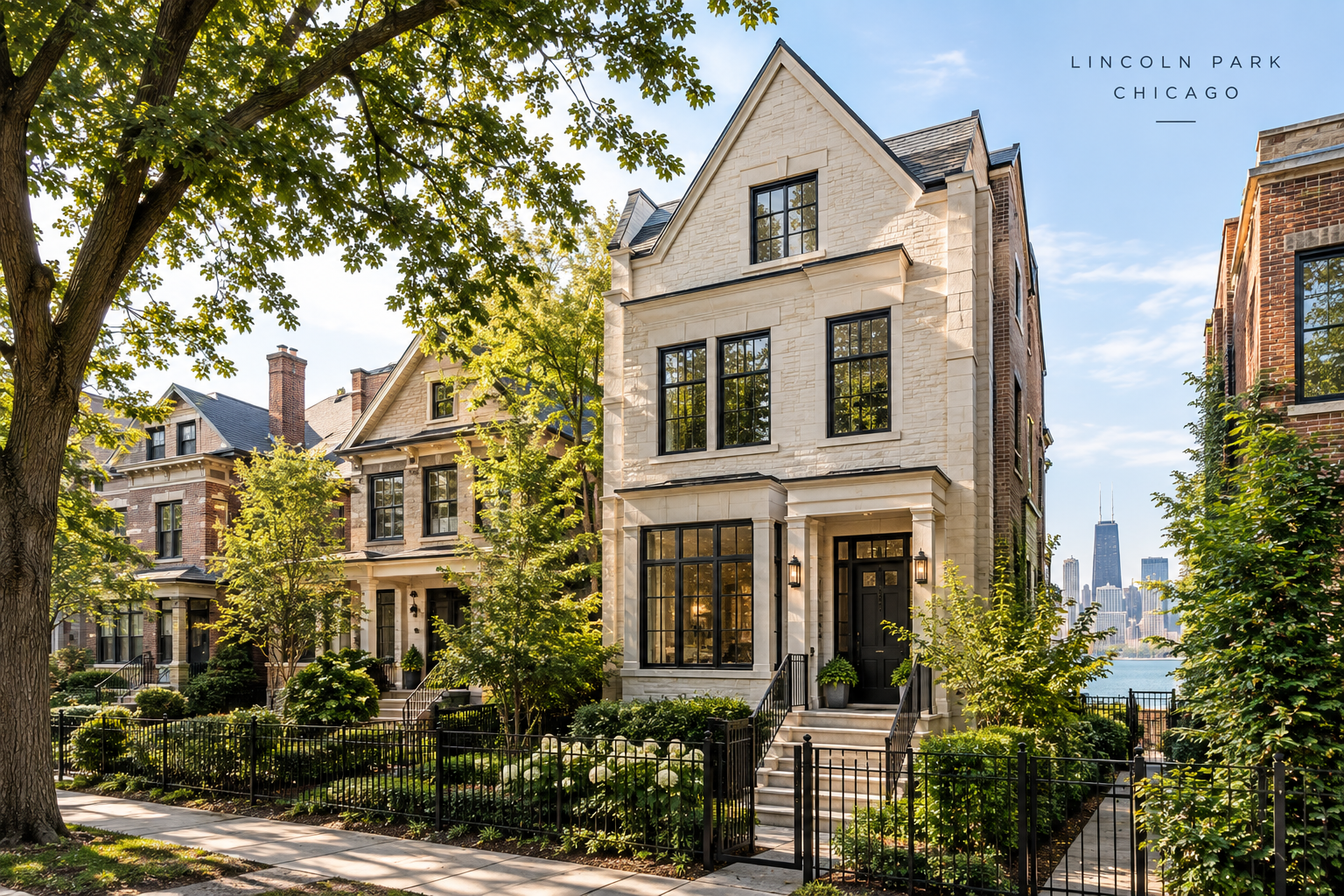
That makes every project a big decision. You're building on a narrow city lot, in an established neighborhood, with neighbors watching closely. Here's what's trending in new builds this year and what to think through before you break ground.
1. Timeless Exteriors That Fit the Street
A few years ago, many new builds in the neighborhood leaned hard into modern glass-and-steel boxes. That's softening. More homeowners want exteriors that feel like they belong on a Lincoln Park block: brick and limestone, traditional proportions, and classic window patterns, with modern touches in the details.
Part of this is taste. Part of it is practical. Homes that blend in tend to hold value well, and some blocks sit within landmark districts where exterior design is reviewed.
2. Layouts Built for Real Family Life
The big open great room is still here, but it's being paired with more defined spaces. Popular features in Lincoln Park new construction include
A kitchen and family room at the back of the house, opening to the yard
A separate, quieter front living room or library
A mudroom off the garage with lockers, a bench, and a dog wash
A dedicated home office with a door that actually closes
A back kitchen or scullery to hide mess during entertaining
3. Lower Levels With Full Ceiling Height
Basements in new homes are designed as true living space from the start. Deeper foundations allow tall ceilings, so the lower level can hold a media room, a gym, a guest suite, a wine room, or a play area. Radiant heat, good natural light through window wells, and proper waterproofing make these spaces comfortable year-round.
4. Rooftop Decks and Outdoor Living
With limited yard space on city lots, homeowners are building up. Rooftop decks with outdoor kitchens, fire features, and views of the skyline or lake are one of the most requested features. Garage roof decks connected to the house by a bridge or terrace are also common.
Backyards are getting more attention too, with covered patios, built-in grills, and landscaping designed for low maintenance.
5. Elevators and Aging-in-Place Features
More buyers are planning to stay in their homes for decades. Residential elevators, once rare, are increasingly planned into four-level Lincoln Park homes. Wider halls, a first-floor bedroom option, curbless showers, and good lighting all make the home work better long-term.
Even if you don't install an elevator right away, framing a shaft for one later is a smart, low-cost move during construction.
6. Energy Efficiency and Electrification
New homes are being built tighter and smarter. Common features include high-performance insulation, triple-pane or high-efficiency windows, heat pump systems, induction cooking, solar-ready roofs, and EV charging in the garage. Chicago's energy code sets a baseline, but many homeowners go beyond it to lower operating costs and future-proof the house.
7. Wellness Spaces
Home gyms, saunas, steam showers, and quiet meditation rooms are showing up in more plans. Some homeowners are adding air filtration and water treatment systems as part of the build.
Smart Technology Built In From the Start
New construction is the easiest time to wire a home properly. Instead of adding smart devices later with extenders and workarounds, homeowners are planning technology into the walls from day one.
Common requests include whole-home Wi-Fi with wired access points, structured cabling for home offices, integrated lighting control, motorized shades, security cameras, and smart thermostats zoned by floor. Many also add conduit to the roof and garage so solar panels or extra chargers can be added easily later.
The key is to plan these systems with your builder during design, not after drywall goes up. A few hours of planning early saves a lot of patching later.
What Homeowners Should Consider Before Building
Zoning and lot limits. Lincoln Park lots are typically narrow, and zoning controls height, setbacks, and how much of the lot you can build on. Find out what your specific lot allows before designing anything.
Landmark districts. Parts of Lincoln Park are in designated historic districts, and demolition or exterior design there may need review. Check early.
Demolition and permits. Tearing down an existing home involves its own permits and timelines, including utility disconnects. Chicago's permitting for new construction can take several months, so build that into your schedule.
Neighbors. Construction on a dense block affects the people next door. A builder who communicates well, keeps a clean site, and protects neighboring properties makes the whole process smoother.
Budget realistically. Luxury new construction in Lincoln Park involves premium materials, specialized trades, and complex city logistics. Get a detailed estimate early and keep a contingency for unknowns like soil conditions.
Timeline. From design through permits and construction, many new builds take well over a year. Planning ahead helps avoid costly changes mid-build.
Choosing a New Construction Company in Lincoln Park
The team you choose matters as much as the design. Look for a new construction company in Lincoln Park that has built on similar lots, understands local zoning and permitting, and can show finished homes nearby. Ask about their process, who manages your project day to day, how they handle change orders, and what warranty they provide.
A design-build approach can make this simpler. With design and construction under one team, costs are checked against the plans as they develop, and there's one point of accountability from the first sketch to the final walkthrough.
R&R Chicago Design-Build is a boutique firm where a small, highly skilled team of designers, architects, engineers, and tradesmen work together. Our process runs from research and discovery, through design with 3D renderings and permit coordination, to construction and a final walkthrough, with a single point of contact the whole way. We've found this approach typically shortens project duration by around 30% compared with the traditional design-bid-build route. If you're considering Lincoln Park new construction, start a conversation with our team.
Frequently Asked Questions
How long does new construction take in Lincoln Park
Often well over a year from design to move-in, depending on permits, size, and complexity.
Can I tear down an older home and build a new one in Lincoln Park?
Often, yes, but properties in landmark districts may face restrictions. Check your lot's status early
What features add the most value to a new Lincoln Park home?
Rooftop decks, finished lower levels with full ceiling height, a well-designed kitchen and family room, and a mudroom are among the most valued.
Building new in Lincoln Park is a rare opportunity to create a home designed exactly for how you live. Take the time to understand your lot, plan for the long term, and choose a team you trust. The decisions you make early will shape the house for decades.
